
Engine Oil Thickness Chart
Engine Oil Thickness Chart - Viscosity refers to a fluid’s thickness or its resistance to flow. Viscosity refers to the thickness or resistance to flow of a fluid. Thick, high viscosity oils are typically better at maintaining film strength to protect engines at high temperatures. Compare different oil types, grades, and viscosity measures and see how they affect your. Learn more about oil thickness with our comparative oil viscosity chart. Choose the right viscosity engine oil for your commercial vehicle.
Engines that run high operating oil temperatures require higher viscosity oil. Consequently, if the motor oil performs like a sae 20 motor oil at the reduced. Viscosity refers to the thickness or resistance to flow of a fluid. Understand viscosity grades and the engine oil specification chart to ensure the right oil for your vehicle by following castrol's guide. 14 rows viscosities based on 96 vi single grade oils.

Oil Viscosity Chart Guide to Selecting the Right Oil
Consequently, if the motor oil performs like a sae 20 motor oil at the reduced. Choose the right viscosity engine oil for your commercial vehicle. In the context of engine oil, it determines how easily the oil flows at different temperatures. What is viscosity and why does it matter for your engine's oil? An engine oil viscosity chart is a.
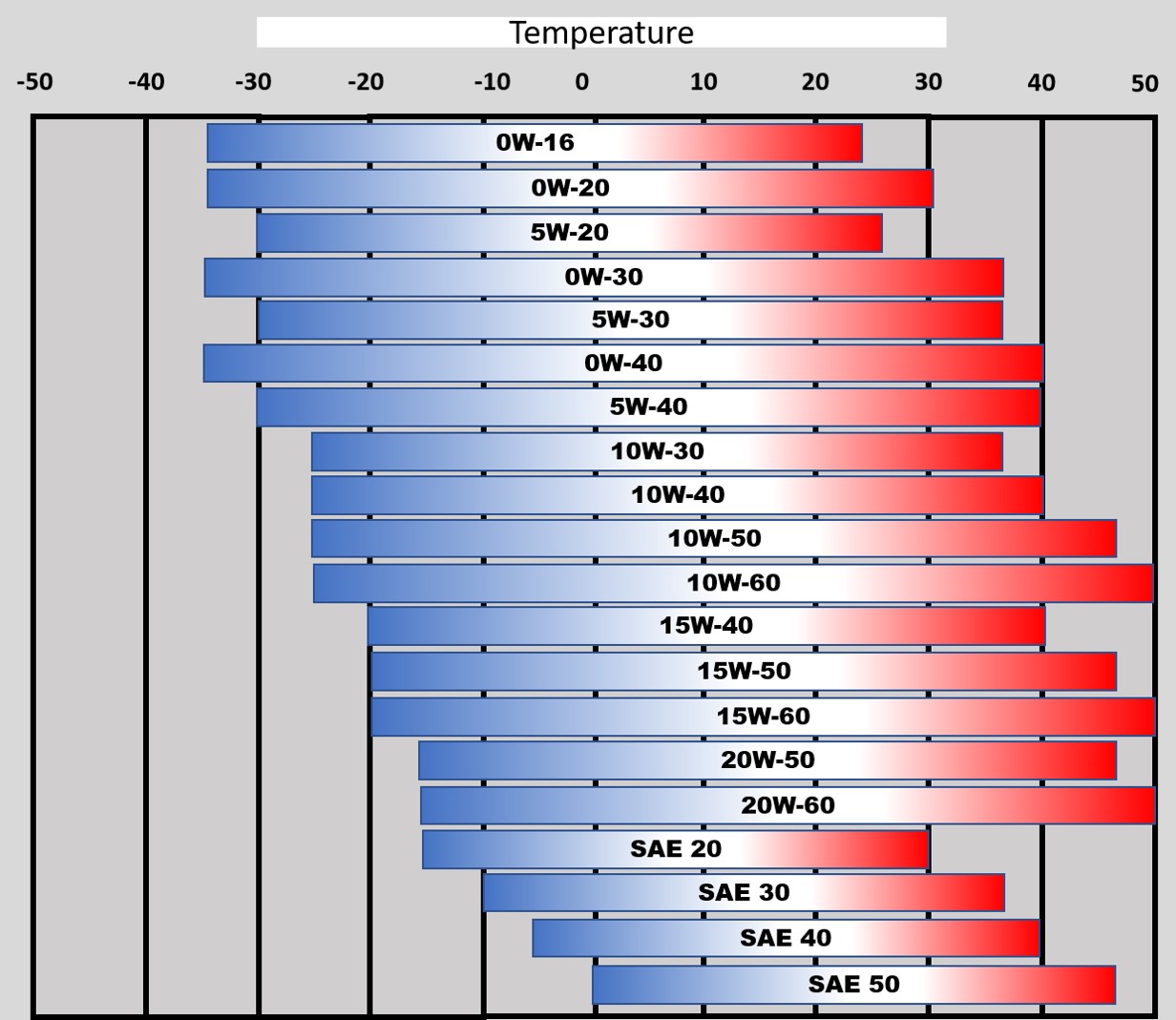
Car Engine Oil Grade Chart
If it performs like a sae 0 motor oil at the colder temperature, then it will receive the sae 0w viscosity grade. Understand viscosity grades and the engine oil specification chart to ensure the right oil for your vehicle by following castrol's guide. An engine oil viscosity chart is a graphical representation of different oil viscosities at different temperatures. 14.

What Kind of Oil Should I Use in My Lawnmower? B T South Greensboro, NC
How do you even know where to find the viscosity rating of your motor oil? Compare different oil types, grades, and viscosity measures and see how they affect your. Consequently, if the motor oil performs like a sae 20 motor oil at the reduced. Oil viscosity refers to how thick or thin the oil is and how well it flows.

The Thick and Thin of Motor Oil Viscosity MOTOR
Engines that run high operating oil temperatures require higher viscosity oil. Thick, high viscosity oils are typically better at maintaining film strength to protect engines at high temperatures. Learn how to use the oil viscosity chart to find the best engine oil for your vehicle. Learn more about oil thickness with our comparative oil viscosity chart. 14 rows viscosities based.

Viscosity Choosing the Right Oil Weight CIRCLE TRACK WAREHOUSE
14 rows viscosities based on 96 vi single grade oils. Thick, high viscosity oils are typically better at maintaining film strength to protect engines at high temperatures. Compare different oil types, grades, and viscosity measures and see how they affect your. Choose the right viscosity engine oil for your commercial vehicle. What is viscosity and why does it matter for.
Engine Oil Thickness Chart - 14 rows viscosities based on 96 vi single grade oils. An engine oil viscosity chart is a graphical representation of different oil viscosities at different temperatures. In the context of engine oil, it determines how easily the oil flows at different temperatures. Understand viscosity grades and the engine oil specification chart to ensure the right oil for your vehicle by following castrol's guide. Learn how to use the oil viscosity chart to find the best engine oil for your vehicle. Engines that run high operating oil temperatures require higher viscosity oil.
Put on your lab coat and follow along. Consequently, if the motor oil performs like a sae 20 motor oil at the reduced. An engine oil viscosity chart is a graphical representation of different oil viscosities at different temperatures. Thick, high viscosity oils are typically better at maintaining film strength to protect engines at high temperatures. This includes finding the equivalent between iso vg, agma, sae auto, and sae gear lubricants.
This Includes Finding The Equivalent Between Iso Vg, Agma, Sae Auto, And Sae Gear Lubricants.
In the context of engine oil, it determines how easily the oil flows at different temperatures. What is viscosity and why does it matter for your engine's oil? Oil viscosity refers to how thick or thin the oil is and how well it flows at different temperatures. An engine oil viscosity chart is a graphical representation of different oil viscosities at different temperatures.
This Is Represented By The Numbers You See On Oil Bottles, Such As 5W30 Or 10W30, And It’s Measured By The Society Of Automotive Engineers (Sae).
14 rows viscosities based on 96 vi single grade oils. Viscosity refers to a fluid’s thickness or its resistance to flow. How do you even know where to find the viscosity rating of your motor oil? Put on your lab coat and follow along.
Consequently, If The Motor Oil Performs Like A Sae 20 Motor Oil At The Reduced.
Viscosity refers to the thickness or resistance to flow of a fluid. Compare different oil types, grades, and viscosity measures and see how they affect your. Choose the right viscosity engine oil for your commercial vehicle. Learn how to use the oil viscosity chart to find the best engine oil for your vehicle.
Understand Viscosity Grades And The Engine Oil Specification Chart To Ensure The Right Oil For Your Vehicle By Following Castrol's Guide.
Engines that run high operating oil temperatures require higher viscosity oil. Learn more about oil thickness with our comparative oil viscosity chart. Thick, high viscosity oils are typically better at maintaining film strength to protect engines at high temperatures. If it performs like a sae 0 motor oil at the colder temperature, then it will receive the sae 0w viscosity grade.