
Motor Oil Temperature Chart
Motor Oil Temperature Chart - The lower the “w” rating, the faster the oil flows when. Normal engine oil temperature can vary significantly based on the vehicle's design, engine type, and operating conditions. The values are defined in a specification known as api 1509. However, as a general rule, temperatures typically fall. When the oil’s viscosity is. Some owner’s manuals allow for different grades based on the predicted operating temperature.
When the oil’s viscosity is. The rule of thumb here reads: The higher the temperature, the lower the viscosity (and vice. However, as a general rule, temperatures typically fall. Some owner’s manuals allow for different grades based on the predicted operating temperature.

Viscosity Index Vs Viscosity Grade
The higher the temperature, the lower the viscosity (and vice. For engine oils there is a specification that must be met at 150°c, known as a high temperature/high shear (ht/hs) viscosity. The oil viscosity index (vi) indicates how much the viscosity levels are influenced by temperature. Normal engine oil temperature can vary significantly based on the vehicle's design, engine type,.

Motor Oil Viscosity Chart Temperature
For example, they may specify a 0w30 synthetic or a 5w30 mineral oil. The values are defined in a specification known as api 1509. The recommended oil grade will also usually be printed on the. Ht/hs simulates what happens in high stress. Normal engine oil temperature can vary significantly based on the vehicle's design, engine type, and operating conditions.
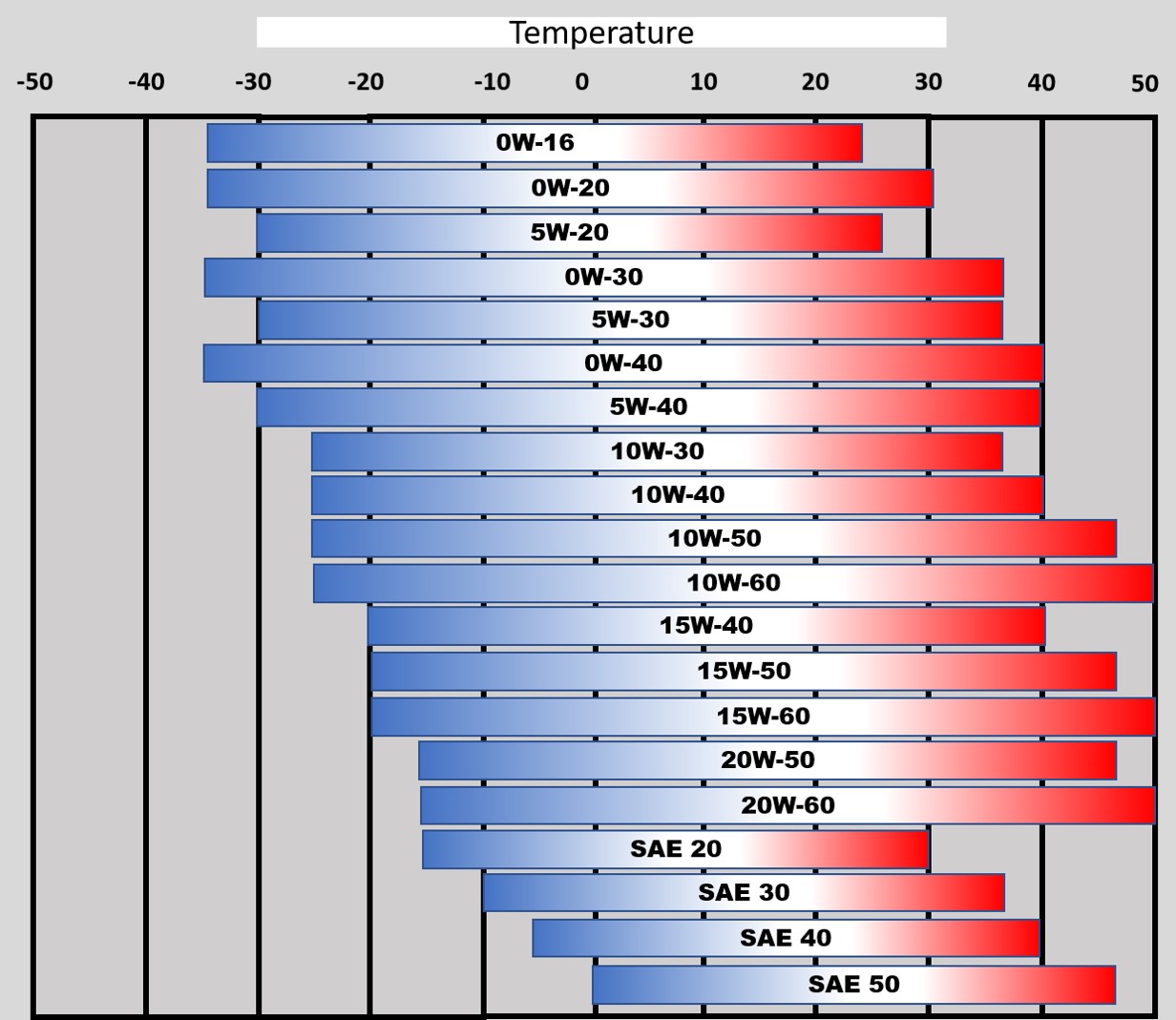
Car Engine Oil Grade Chart
The recommended oil grade will also usually be printed on the. The values are defined in a specification known as api 1509. Maintaining the correct viscosity of engine oil is vital for preventing premature engine wear, maximizing fuel efficiency, and prolonging engine life. In typical viscosity charts, you can find the saybolt viscosity of an engine oil at warm temperature.

Engine Oil Temperature Range Chart
When the oil’s viscosity is. Maintaining the correct viscosity of engine oil is vital for preventing premature engine wear, maximizing fuel efficiency, and prolonging engine life. The lower the “w” rating, the faster the oil flows when. For engine oils there is a specification that must be met at 150°c, known as a high temperature/high shear (ht/hs) viscosity. Motor oil.

Oil viscosity vs temperature chart mzaercuba
For example, they may specify a 0w30 synthetic or a 5w30 mineral oil. Normal engine oil temperature can vary significantly based on the vehicle's design, engine type, and operating conditions. Ht/hs simulates what happens in high stress. The oil viscosity index (vi) indicates how much the viscosity levels are influenced by temperature. The recommended oil grade will also usually be.
Motor Oil Temperature Chart - Normal engine oil temperature can vary significantly based on the vehicle's design, engine type, and operating conditions. Ht/hs simulates what happens in high stress. For engine oils there is a specification that must be met at 150°c, known as a high temperature/high shear (ht/hs) viscosity. The values are defined in a specification known as api 1509. Some owner’s manuals allow for different grades based on the predicted operating temperature. Motor oil viscosity grades are based on a scale developed by the api (american petroleum institute) lubricant organization.
When the oil’s viscosity is. However, as a general rule, temperatures typically fall. Some owner’s manuals allow for different grades based on the predicted operating temperature. For example, they may specify a 0w30 synthetic or a 5w30 mineral oil. The values are defined in a specification known as api 1509.
For Engine Oils There Is A Specification That Must Be Met At 150°C, Known As A High Temperature/High Shear (Ht/Hs) Viscosity.
Maintaining the correct viscosity of engine oil is vital for preventing premature engine wear, maximizing fuel efficiency, and prolonging engine life. Normal engine oil temperature can vary significantly based on the vehicle's design, engine type, and operating conditions. Motor oil viscosity grades are based on a scale developed by the api (american petroleum institute) lubricant organization. The recommended oil grade will also usually be printed on the.
The Oil Viscosity Index (Vi) Indicates How Much The Viscosity Levels Are Influenced By Temperature.
Some owner’s manuals allow for different grades based on the predicted operating temperature. The values are defined in a specification known as api 1509. In typical viscosity charts, you can find the saybolt viscosity of an engine oil at warm temperature (100 °f) and hot temperature (210 °f) in the middle of the viscosity chart, you’ll. For example, they may specify a 0w30 synthetic or a 5w30 mineral oil.
The Higher The Temperature, The Lower The Viscosity (And Vice.
The lower the “w” rating, the faster the oil flows when. The rule of thumb here reads: Ht/hs simulates what happens in high stress. When the oil’s viscosity is.