
Ohms Law Chart
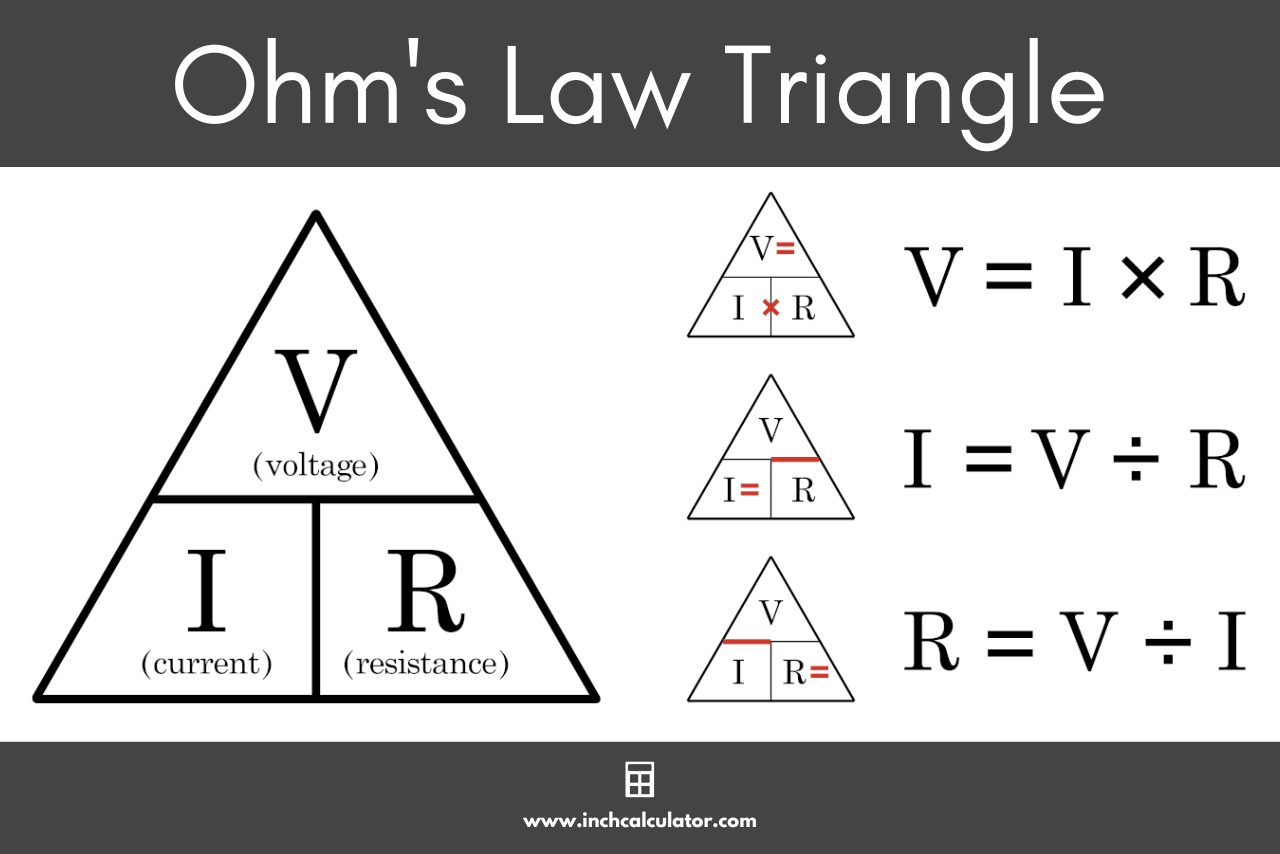
Ohms Law Chart - Ohm's law defines the relationships between (p) power, (e) voltage, (i) current, and (r) resistance. At a given voltage when resistance increases, current decreases. To better understand the relationship between various parameters, we can take all the equations used to find the voltage, current, resistance and power, and condense them into a simple ohm’s law pie chart as shown below. This handy chart shows the forumlas for calculating the current, resistance, voltage, and watts using ohms law. Ohm’s law states that the current flowing through a conductor between two points is directly proportional to the voltage across the two points and inversely proportional to the resistance between them. Basic math skills are all you need, and the ohm’s law wheel makes it even simpler to comprehend.
It includes twelve patterns which address any mode of famous electric law. To use the chart, select the unit to be calculated, then pick one of the three formulas that corresponds to the two known values. We can take all of the previous ohm’s law equations for finding voltage, current, resistance and of course power, and condense them into a simple ohms law pie chart for use in ac and dc circuits and calculations as shown. Below are the formulas for these calculations. Ohm’s law pie chart is a great tool to make quick electric calculations (see a picture).

"Ohms Law" Poster by KiwiMrDee Redbubble
This handy chart shows the forumlas for calculating the current, resistance, voltage, and watts using ohms law. The chart below left shows the relationship between voltage, current, and resistance. At a given voltage when resistance increases, current decreases. Ohm's law defines the relationships between (p) power, (e) voltage, (i) current, and (r) resistance. You might notice the diagram resembles a.

Ohm's Law Calculator Mouser Australia
This handy chart shows the forumlas for calculating the current, resistance, voltage, and watts using ohms law. Basic math skills are all you need, and the ohm’s law wheel makes it even simpler to comprehend. The chart below left shows the relationship between voltage, current, and resistance. When resistance decreases, current increases. Determining a circuit’s amperage without an ammeter.
Ohm's Law Calculator and Electrical Formulas Inch Calculator
Or to find out how much power your circuit uses. It includes twelve patterns which address any mode of famous electric law. Determining a circuit’s amperage without an ammeter. You can use it to find what resistor value you need for an led. Ohm’s law states that the current flowing through a conductor between two points is directly proportional to.

Ohms law chart ICS Technologies
( i ) current is what flows on a wire or conductor like water flowing down a river. Ohm’s law is fundamental in the study of electricity, and its formula is given by: This handy chart shows the forumlas for calculating the current, resistance, voltage, and watts using ohms law. How do you know this? One ohm is the resistance.

Ohm's Law & Watt's Law Cheat Sheet
We can take all of the previous ohm’s law equations for finding voltage, current, resistance and of course power, and condense them into a simple ohms law pie chart for use in ac and dc circuits and calculations as shown. You might notice the diagram resembles a triangle, but focus on the goal: At a given voltage when resistance increases,.
Ohms Law Chart - When resistance decreases, current increases. To better understand the relationship between various parameters, we can take all the equations used to find the voltage, current, resistance and power, and condense them into a simple ohm’s law pie chart as shown below. Ohm’s law states that the current flowing through a conductor between two points is directly proportional to the voltage across the two points and inversely proportional to the resistance between them. You can use it to find what resistor value you need for an led. The chart below left shows the relationship between voltage, current, and resistance. Ohm’s law is fundamental in the study of electricity, and its formula is given by:
Ohm’s law states that the current flowing through a conductor between two points is directly proportional to the voltage across the two points and inversely proportional to the resistance between them. One ohm is the resistance value through which one volt will maintain a current of one ampere. This handy chart shows the forumlas for calculating the current, resistance, voltage, and watts using ohms law. Determining a circuit’s amperage without an ammeter. It includes twelve patterns which address any mode of famous electric law.
It Includes Twelve Patterns Which Address Any Mode Of Famous Electric Law.
Simple, divide the voltage by the resistance of the circuit. Ohm's law defines the relationships between (p) power, (e) voltage, (i) current, and (r) resistance. This handy chart shows the forumlas for calculating the current, resistance, voltage, and watts using ohms law. ( i ) current is what flows on a wire or conductor like water flowing down a river.
Ohm’s Law Pie Chart Is A Great Tool To Make Quick Electric Calculations (See A Picture).
Below are the formulas for these calculations. To use the chart, select the unit to be calculated, then pick one of the three formulas that corresponds to the two known values. ”the amount of current flowing in a circuit made up of pure resistances is directly proportional to the electromotive forces impressed on the circuit and inversely proportional to the total resistance of the circuit.” How do you know this?
Ohms Law Is A Simple Formula That Makes It Easy To Calculate Voltage, Current, And Resistance.
At a given voltage when resistance increases, current decreases. Ohm’s law states that the current flowing through a conductor between two points is directly proportional to the voltage across the two points and inversely proportional to the resistance between them. The chart below left shows the relationship between voltage, current, and resistance. Ohm’s law is fundamental in the study of electricity, and its formula is given by:
To Better Understand The Relationship Between Various Parameters, We Can Take All The Equations Used To Find The Voltage, Current, Resistance And Power, And Condense Them Into A Simple Ohm’s Law Pie Chart As Shown Below.
Basic math skills are all you need, and the ohm’s law wheel makes it even simpler to comprehend. Determining a circuit’s amperage without an ammeter. You might notice the diagram resembles a triangle, but focus on the goal: Or to find out how much power your circuit uses.