
Ohms Law Charts
Ohms Law Charts - See how ohm’s law (equation \ref{ohms}) relates to a simple circuit. The ohm’s law and joule’s law formula wheel that is used to calculate p, i, v, and r. • when the voltage is decreased the current. You can use it to find what resistor value you need for an. Understanding ohm’s law is crucial for electricians. Voltage, current, resistance, and power can be calculated using ohm’s law.
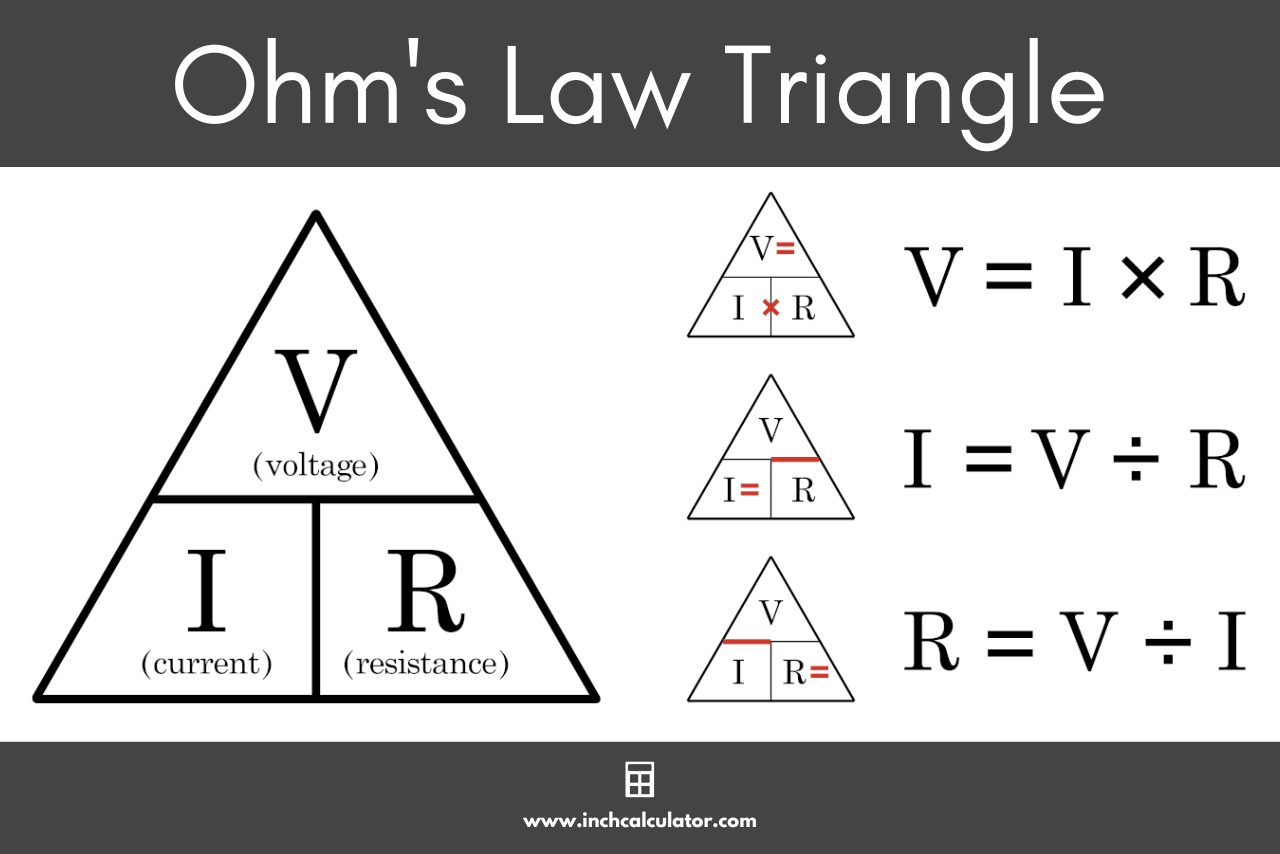
Adjust the voltage and resistance, and see the current change according to ohm’s law. Below is a chart containing the formulas related to ohm’s law. The ohm’s law and joule’s law formula wheel that is used to calculate p, i, v, and r. Ohms law is a simple formula that makes it easy to calculate voltage, current, and resistance. The basic formula of ohm’s law, i = v/r, helps determine the current if the voltage and resistance are known.
InterNACHI Inspection Graphics Library Electrical » General » ohmslaw
R is the resistance, measured in ohms. It’s the key to mastering how voltage, current, and resistance interact, simplifying complex electrical concepts. Ohm's law (named after the german physicist georg ohm) defines the relationship between voltage, current and resistance. Ohm's law states that the current through a conductor between two points is directly proportional to the potential difference or voltage.

Ohm's Law & Watt's Law Cheat Sheet
Ohm's law combining the elements of voltage, current, and resistance, ohm developed the formula: • when the voltage is decreased the current. The following useful ohm’s law chart and its related formulas are used to calculate basic electrical quantities and parameters, such as voltage, current, power, and resistance. Below are the formulas for these calculations. The sizes of the symbols.

Ohm’s Law Event Power your event power specialists
V = i x r. Ohms law is a simple formula that makes it easy to calculate voltage, current, and resistance. Ohm's law combining the elements of voltage, current, and resistance, ohm developed the formula: ”the amount of current flowing in a circuit made up of pure resistances is directly proportional to the electromotive forces impressed on the circuit and.
Ohm's Law Calculator and Electrical Formulas Inch Calculator
Ohm's law is an empirical relation which accurately describes the conductivity of the vast majority of electrically conductive materials over many orders of magnitude of current. Adjust the voltage and resistance, and see the current change according to ohm’s law. Ohm's law combining the elements of voltage, current, and resistance, ohm developed the formula: Ohm's law states that the current.

Ohm's Law Statement, Formula, Derivation, Applications, Limitations
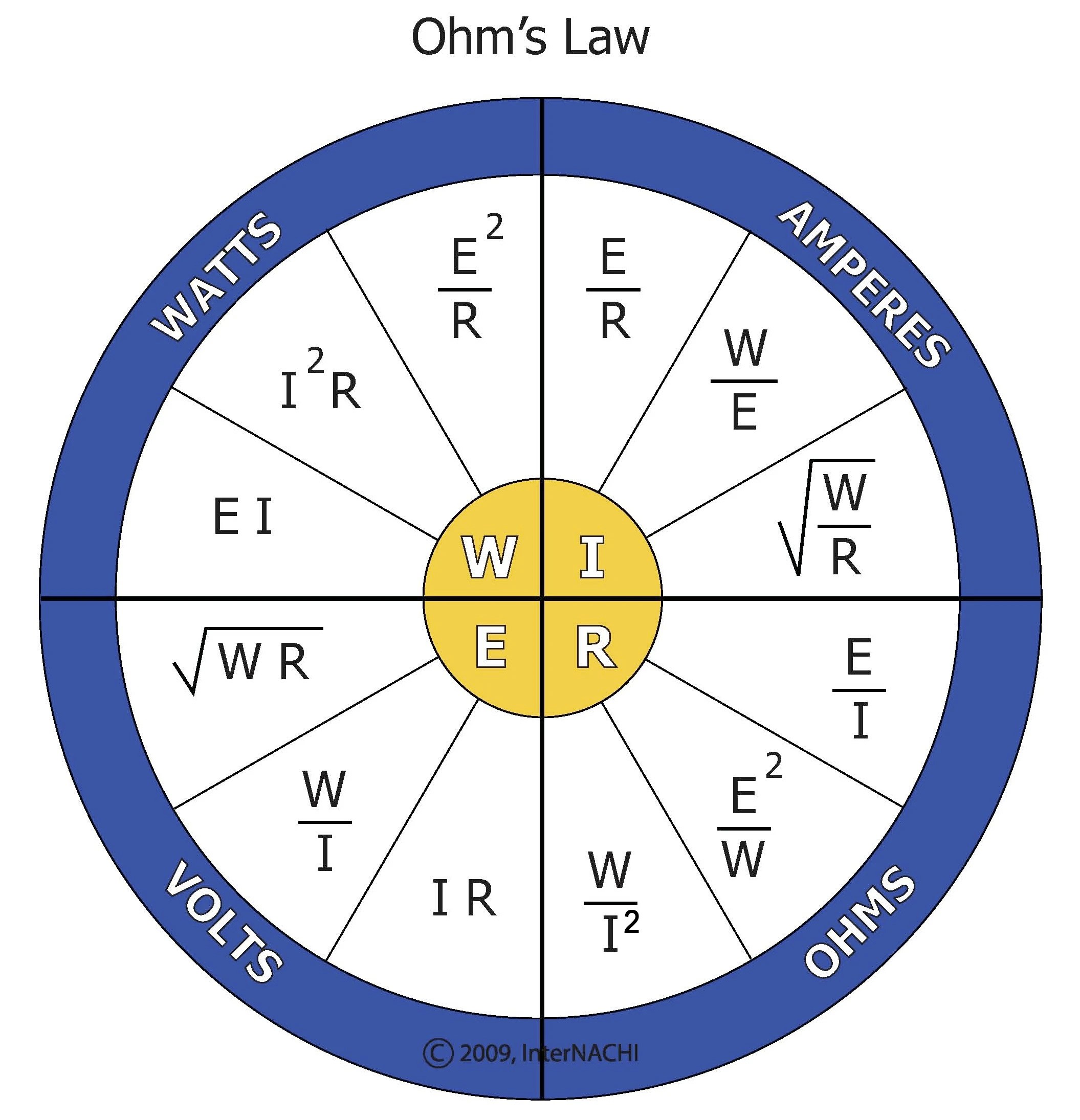
To use the chart, from the center circle, select the value you need to find, i (amps), r (ohms), e (volts) or p (watts). Ohm’s law states that current. Ohm's law states that the current through a conductor between two points is directly proportional to the potential difference or voltage across the two points, and inversely. The ohm’s law and.
Ohms Law Charts - To use the chart, from the center circle, select the value you need to find, i (amps), r (ohms), e (volts) or p (watts). Ohms law is a simple formula that makes it easy to calculate voltage, current, and resistance. Ohm's law defines the relationships between (p) power, (e) voltage, (i) current, and (r) resistance. Ohms’s law is a calculation that is used to work out and identify the relationship between voltage, current and resistance in an electrical circuit. Below is a chart containing the formulas related to ohm’s law. Below are the formulas for these calculations.
We can take all of the previous ohm’s law equations for finding voltage, current, resistance and of course power, and condense them into a simple ohms law pie chart for use in ac and dc. To better understand the relationship between various parameters, we can take all the equations used to find the voltage, current, resistance and power, and condense them into. The following useful ohm’s law chart and its related formulas are used to calculate basic electrical quantities and parameters, such as voltage, current, power, and resistance. Below is a chart containing the formulas related to ohm’s law. Ohms’s law is a calculation that is used to work out and identify the relationship between voltage, current and resistance in an electrical circuit.
It’s The Key To Mastering How Voltage, Current, And Resistance Interact, Simplifying Complex Electrical Concepts.
The following useful ohm’s law chart and its related formulas are used to calculate basic electrical quantities and parameters, such as voltage, current, power, and resistance. Voltage, current, resistance, and power can be calculated using ohm’s law. Ohm’s law states that the current flowing through a conductor between two points is directly proportional to the voltage across the two points and inversely. What is the ohms law/pir wheel?
The Basic Formula Of Ohm’s Law, I = V/R, Helps Determine The Current If The Voltage And Resistance Are Known.
Where v = voltage in volts i = current in amps r = resistance in ohms this is called. Adjust the voltage and resistance, and see the current change according to ohm’s law. To use the chart, from the center circle, select the value you need to find, i (amps), r (ohms), e (volts) or p (watts). The first, and perhaps most important, relationship between current, voltage, and resistance is called ohm’s law, discovered by georg simon ohm and published in his 1827 paper, the.
Ohms’s Law Is A Calculation That Is Used To Work Out And Identify The Relationship Between Voltage, Current And Resistance In An Electrical Circuit.
Ohms law is a simple formula that makes it easy to calculate voltage, current, and resistance. Ohm's law is an empirical relation which accurately describes the conductivity of the vast majority of electrically conductive materials over many orders of magnitude of current. It shows all of the formulas created from the ohm’s law. Understanding ohm’s law is crucial for electricians.
Below Is A Chart Containing The Formulas Related To Ohm’s Law.
You can use it to find what resistor value you need for an. Ohm’s law states that current. See how ohm’s law (equation \ref{ohms}) relates to a simple circuit. Ohm's law (named after the german physicist georg ohm) defines the relationship between voltage, current and resistance.