
Oncotype Dx Recurrence Score Chart
Oncotype Dx Recurrence Score Chart - The higher number is associated with a greater probability of the cancer returning and that the patient will receive greater benefits from undergoing chemotherapy. This information could help guide decisions about the need for postoperative radiation therapy following treatment with. The recurrence score predicts the chance of the cancer coming back. The recurrence score result is used to predict the risk of the breast cancer returning at a distant site and whether chemotherapy may help reduce the risk. The test predicts whether a woman will benefit from chemotherapy. Your results will include a recurrence score from 0 to 100.
The recurrence score predicts the chance of the cancer coming back. What is a recurrence score? This information could help guide decisions about the need for postoperative radiation therapy following treatment with. A low recurrence score is 25 or lower. If you have a low recurrence score (0 to 25)

MetaAnalysis of the Effect of the Oncotype DX® Assay Recurrence Score
A high recurrence score is 26 or higher. If you have a low recurrence score (0 to 25) The test predicts whether a woman will benefit from chemotherapy. This number, between 0 and 100, is calculated by measuring the activity of specific genes in the breast cancer tissue. This information could help guide decisions about the need for postoperative radiation.

(PDF) The Oncotype DX recurrence score impact on the management of ER
This information could help guide decisions about the need for postoperative radiation therapy following treatment with. What is a recurrence score? The recurrence score predicts the chance of the cancer coming back. The results of the oncotype dx test are given as a recurrence score. The results of the oncotype dx is a recurrence score, a number which ranges from.

Mammaprint® Comparison Breast Recurrence Score®│ Precision Oncology
The recurrence score result is used to predict the risk of the breast cancer returning at a distant site and whether chemotherapy may help reduce the risk. A high recurrence score is 26 or higher. This number, between 0 and 100, is calculated by measuring the activity of specific genes in the breast cancer tissue. This test helps decide if.

Oncotype Dx Recurrence Score Chart A Visual Reference of Charts
The recurrence score result is used to predict the risk of the breast cancer returning at a distant site and whether chemotherapy may help reduce the risk. The results of the oncotype dx is a recurrence score, a number which ranges from 1 through 100. The results of the oncotype dx test are given as a recurrence score. What is.
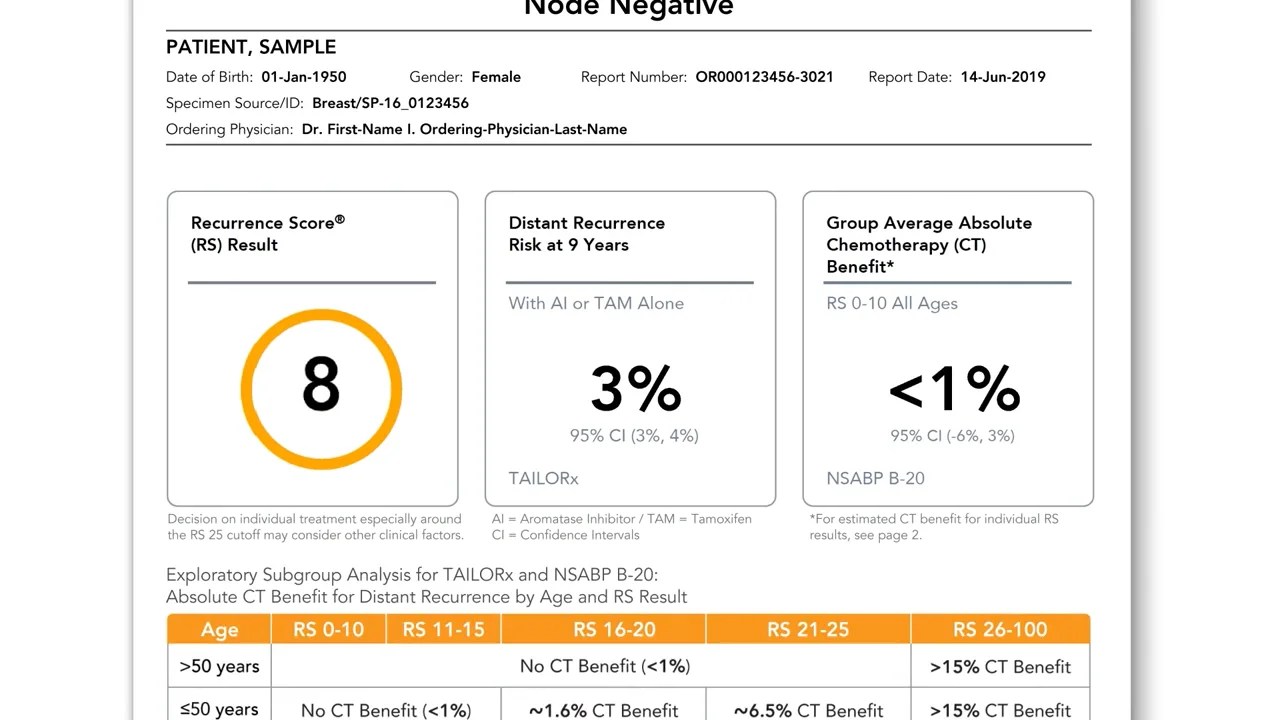
Oncotype DX Breast Recurrence Score® Understanding Your Results
If you have a low recurrence score (0 to 25) The recurrence score result is used to predict the risk of the breast cancer returning at a distant site and whether chemotherapy may help reduce the risk. Recurrence score ® result this number, between 0 and 100, is calculated by measuring the activity of specific genes in the breast cancer.
Oncotype Dx Recurrence Score Chart - A low recurrence score is 25 or lower. The higher number is associated with a greater probability of the cancer returning and that the patient will receive greater benefits from undergoing chemotherapy. Recurrence score ® result this number, between 0 and 100, is calculated by measuring the activity of specific genes in the breast cancer tissue. The test predicts whether a woman will benefit from chemotherapy. This number, between 0 and 100, is calculated by measuring the activity of specific genes in the breast cancer tissue. The results of the oncotype dx test are given as a recurrence score.
This test helps decide if using chemotherapy along with hormone (endocrine) therapy after surgery will lower your risk of your cancer coming back (recurring). What is a recurrence score? The results of the oncotype dx is a recurrence score, a number which ranges from 1 through 100. The recurrence score result is used to predict the risk of the breast cancer returning at a distant site and whether chemotherapy may help reduce the risk. This number, between 0 and 100, is calculated by measuring the activity of specific genes in the breast cancer tissue.
If You Have A Low Recurrence Score (0 To 25)
The recurrence score result is used to predict the risk of the breast cancer returning at a distant site and whether chemotherapy may help reduce the risk. This number, between 0 and 100, is calculated by measuring the activity of specific genes in the breast cancer tissue. A low recurrence score is 25 or lower. The higher number is associated with a greater probability of the cancer returning and that the patient will receive greater benefits from undergoing chemotherapy.
This Test Helps Decide If Using Chemotherapy Along With Hormone (Endocrine) Therapy After Surgery Will Lower Your Risk Of Your Cancer Coming Back (Recurring).
This information could help guide decisions about the need for postoperative radiation therapy following treatment with. The recurrence score result is used to predict the risk of the breast cancer returning at a distant site and whether chemotherapy may help reduce the risk. A high recurrence score is 26 or higher. What is a recurrence score?
The Recurrence Score Predicts The Chance Of The Cancer Coming Back.
The results of the oncotype dx test are given as a recurrence score. The recurrence score result is used to predict the risk of the breast cancer returning at a distant site and whether chemotherapy may help reduce the risk. This number, between 0 and 100, is calculated by measuring the activity of specific genes in the breast cancer tissue. Recurrence score ® result this number, between 0 and 100, is calculated by measuring the activity of specific genes in the breast cancer tissue.
The Results Of The Oncotype Dx Is A Recurrence Score, A Number Which Ranges From 1 Through 100.
Your results will include a recurrence score from 0 to 100. The test predicts whether a woman will benefit from chemotherapy.